
Rules and templates people can actually use.
The useful parts of AI adoption are usually plain: classify the data, keep a human accountable and document the first workflows before they spread.

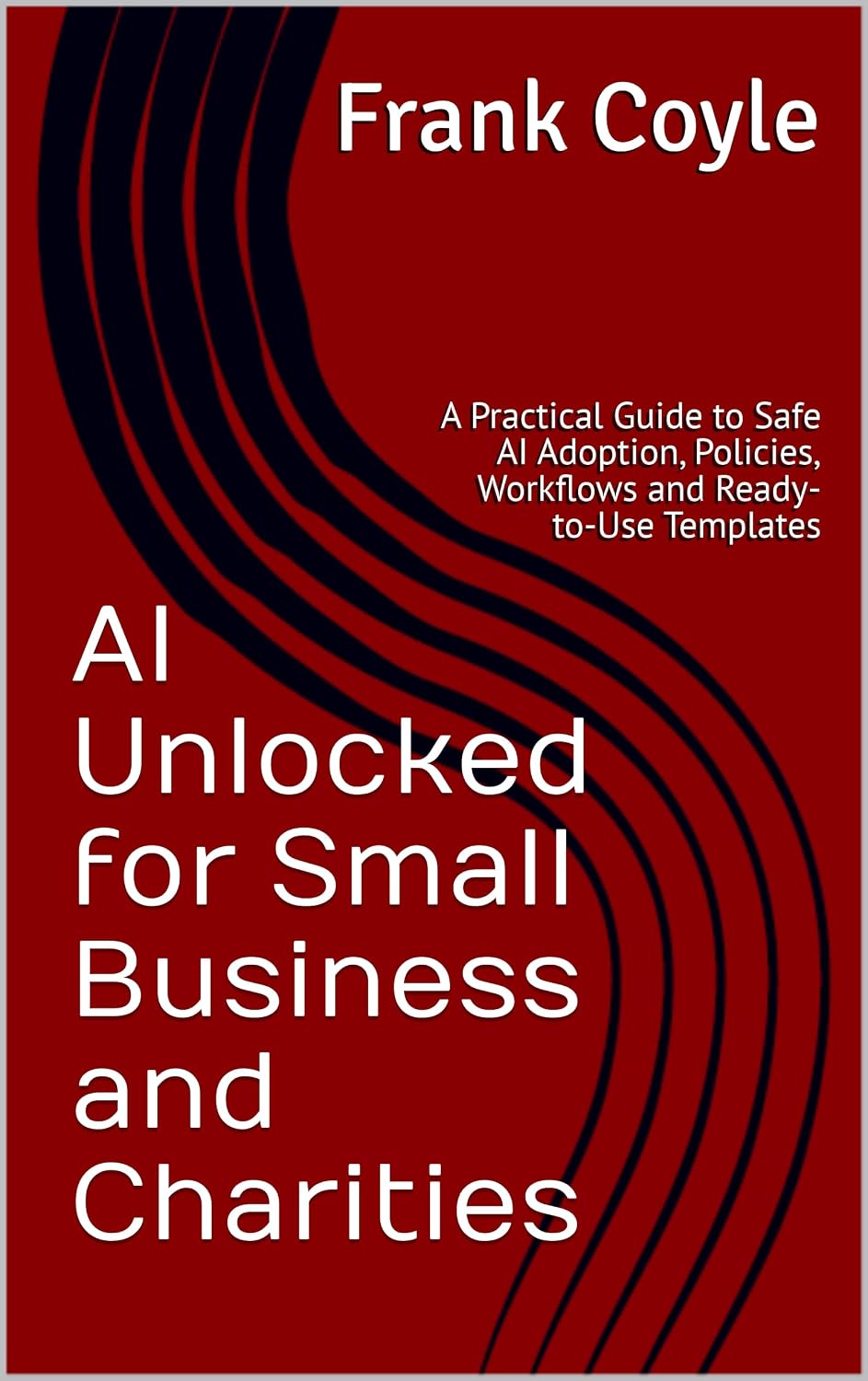
AI Unlocked for Small Business and Charities
The book gives you the method. Ask for the editable toolkit when you want the working files, starter templates and a sensible first place to begin.
- Editable toolkit by request: policy starter, data model, workflow worksheet and readiness checklist
- Working files you can adapt for your own organisation
- Practical next step: use the resources on a real workflow before choosing more tools
Ask for the working files.
AI Acceptable Use Policy Starter
A short policy covering approved tools, prohibited uses, human review, accuracy, confidentiality and incident reporting.
Traffic-Light Data Model
Green is safe to use, amber needs care and approved tools, red stays out of general AI tools. When in doubt, go up a colour.
First Workflow Worksheet
A plain way to pick one useful task, check the data, write the instruction and decide who reviews the result.
AI Readiness Checklist
A starting checklist for workload, risk, tools and team confidence before you choose what to automate.
Want the editable toolkit?
Ask for the starter toolkit or one editable resource you want to use first.
This is also a simple way to start a conversation if you want help applying the method to your organisation.
The questions people are too polite to ask
Short answers from the book's method: safe, practical and built around the work rather than the latest tool.
Will AI replace my staff?
No. The goal is to take the dull, repetitive load off your people so they can spend more time on the work only humans can do. People stay in charge of every decision that matters.
Is our data safe?
Safety comes first. We set clear rules about what can and cannot go into AI tools, use a simple traffic-light system for sensitive information and keep a human review step in every workflow.
We have no technical people. Is that a problem?
Not at all. That is exactly who this is built for. Everything is explained in plain English and you are left with runbooks anyone on your team can follow.
We are a small charity. Can we afford this?
Very likely. Pricing is reduced, sliding-scale or no-cost where possible for charities and not-for-profits and we always start with the smallest useful step.
Do we have to buy lots of new tools?
Usually not. Wherever we can, we build on the tools you already pay for, rather than adding new subscriptions and logins.
What if it does not stick after you leave?
We train an internal champion, leave clear guides and a 90-day roadmap and offer monthly office hours if you want ongoing support. You are never left stranded.
Still have a question on your mind?
Ask it on a free readiness call. There is no such thing as a silly question here.
Book a free readiness call