
Start with work, not tools
The job comes first. The tool only matters if it makes that job safer, faster or clearer.
I do not start with a tool demo. I start with the work your team already does, the data that needs care and the places where a reviewed AI workflow could quietly give time back.
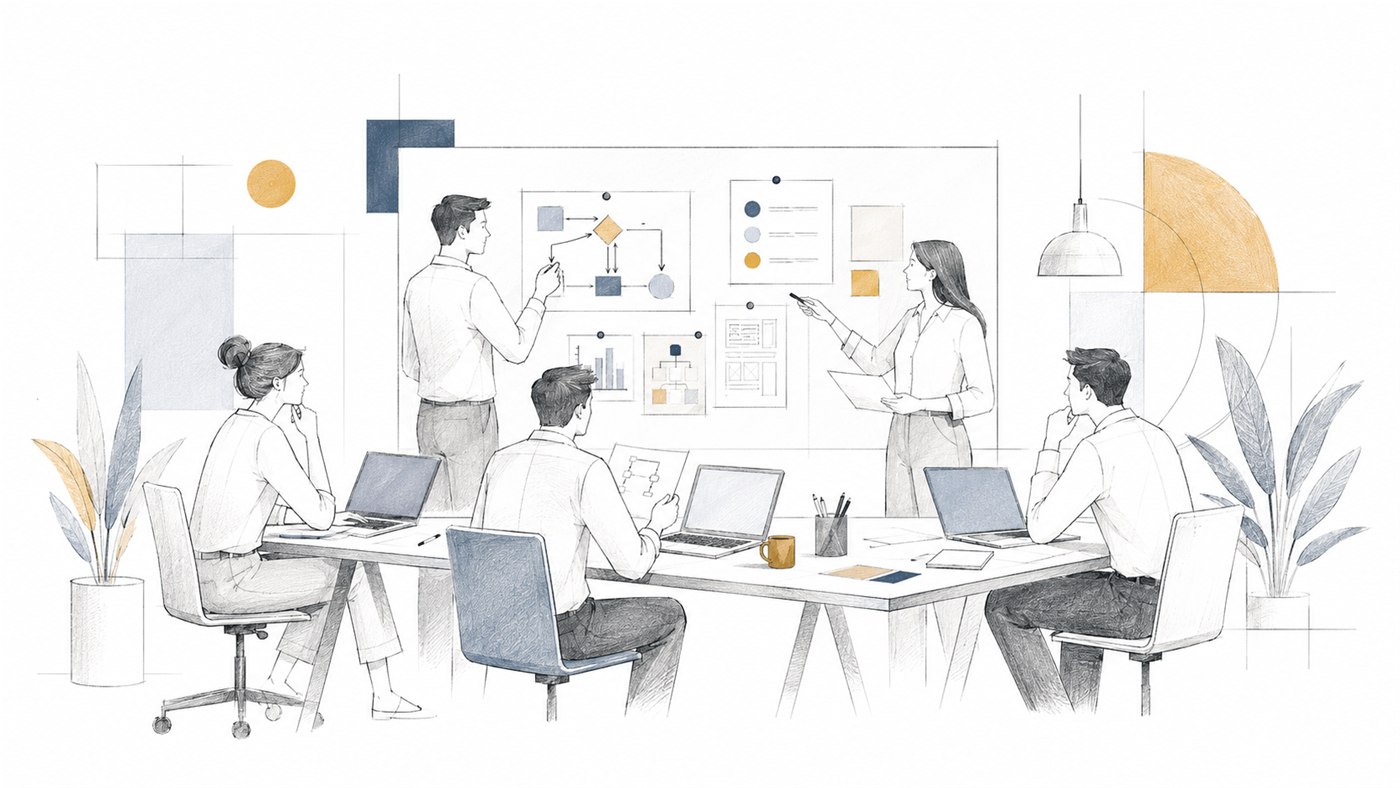
The order matters. We make the work visible first, draw the line around sensitive data, then build a small proof that people can actually keep using.
Map the tasks, pressure points, tools and quiet AI use already happening in the team.
Agree what can go into AI, what needs care and what stays out of general tools.
Pick useful work that is frequent, painful and low enough risk to learn from safely.
Create reusable instructions, templates and review steps around real work, not pretend examples.
Train people, name an owner and leave a clear next-workflow list for the next ninety days.
These are the checks I keep coming back to, whether we are doing a short clarity session or a hands-on workflow sprint.
The job comes first. The tool only matters if it makes that job safer, faster or clearer.
AI can draft, search and suggest. People still decide, approve and own the result.
The calls that affect people, trust or reputation stay with a named human reviewer.
A modest workflow used every week beats a dramatic demo that disappears by Friday.
Wherever possible, we build on the tools your organisation already pays for instead of adding more subscriptions, logins and noise.
The goal is not to automate the organisation. The goal is one reviewed workflow that proves the method and gives people time back.
Staff write each grant application from scratch. Evidence is scattered across drives and inboxes. Reporting season becomes a panic every time.
A reusable grant workflow: approved source material, an evidence checklist, drafted sections and a named human who checks every claim before submission.
A short readiness call is the easiest way to find out. No jargon, no pressure.