
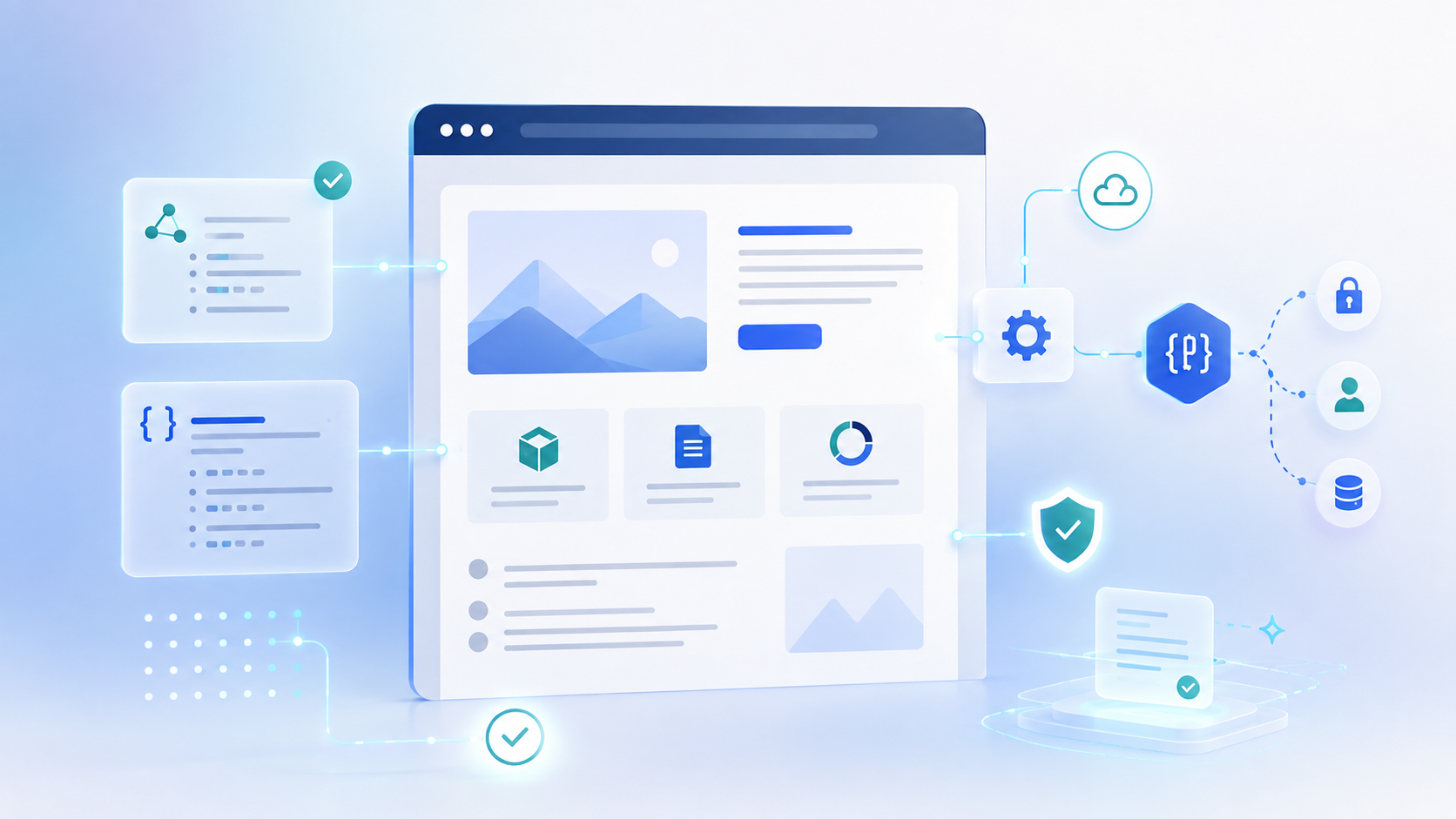
For the last 20 years, most websites have been designed around two audiences: people and search engines.
That is changing.
AI assistants are increasingly being used to find information, compare suppliers, recommend products and answer questions. The next step is already emerging: AI agents that can interact with websites, use online services and complete tasks on behalf of users.
That means your website may soon have a third audience: machines acting for your customers.
This is not just another version of SEO
Traditional SEO helps search engines find and rank your pages.
Optimising for AI goes further. It helps AI systems:
- Find your information
- Understand what your business does
- Decide whether your content is trustworthy
- Quote or recommend you accurately
- Use your online services safely
For many organisations, the immediate opportunity is visibility.
When somebody asks an AI assistant for advice, a supplier recommendation or an explanation of a service, you want your business to be understood and represented correctly. You do not want the system to overlook you, use old information or misunderstand what you offer.
Over time, this will also become an integration issue.
Customers may ask an AI agent to find an appointment, check availability, compare options, request a quote or complete a purchase. Websites that provide clear, structured and secure ways to do those things will be much easier for agents to use.
What does an AI-ready website look like?
The foundations are not especially exotic.
Your website must be easy to crawl, with clear navigation, useful page titles and content that is available as readable text. Important information should not be buried in images, scripts or vague marketing language.
The content itself should be clearly structured. AI systems need to understand your services, prices, locations, policies, dates and areas of expertise without having to guess.
Structured data can help describe the organisation, its people, products, services and articles in a machine-readable form. Accurate publication dates, authorship and supporting evidence also make it easier for AI systems to assess whether information is current and trustworthy.
You should also decide which AI systems are allowed to access the site. Search crawlers, model-training bots, bulk scrapers and agents acting for individual users are not the same thing. They should not automatically receive the same permissions.
For more advanced websites, this can extend to publishing APIs, authentication instructions and descriptions of the tasks an AI agent is allowed to perform.
Cloudflare’s recommendations include technologies such as API catalogues, OAuth discovery, MCP, A2A Agent Cards and WebMCP. These are important developments, but they sit near the top of the maturity curve.
Most businesses do not need to start there.
The sensible order is:
- Make the website easy to find and understand.
- Make the content accurate, current and credible.
- Provide useful information in structured, machine-readable formats.
- Add APIs and agent integrations where there is a real business case.
Why this matters now
The way people use the internet is changing.
Instead of searching, opening several pages and assembling an answer themselves, they increasingly ask an AI system to do the research for them.
That AI system becomes an intermediary between your business and the customer.
If it cannot understand your website, you may not appear in the answer. If your content is unclear, it may describe your services incorrectly. If your information is out of date, it may confidently give the customer the wrong answer.
This is not a reason to chase every new AI protocol or add an llms.txt file and declare victory.
It is a reason to review whether your website is prepared for a world in which AI systems are discovering, interpreting and eventually using online services on behalf of people.
The organisations that address this early will be easier to find, easier to recommend and easier to work with.
I help businesses assess how ready their websites and digital services are for AI, identify the useful changes and avoid wasting time on technical theatre.